We love hummus in our house. It’s been a staple for years for snacks, in sandwiches, for dipping, and because it’s a good source of protein and is naturally gluten and dairy free it’s a handy food to keep around.
I have been eaten hummus since my childhood, having spent time in the Middle East. When I first started working as a nanny, almost 32 years ago, the family I worked for used it as a regular snack/accompniment to meals, and it’s remained a staple for me.
Hummus is one of the best-known foods of the Middle East, loved for its creamy texture, nutty flavour and simplicity. Traditionally made from chickpeas, tahini (sesame paste), lemon juice, garlic and olive oil, it is commonly served as a dip or spread with flatbread, vegetables and other mezze dishes.
The word hummus comes from the Arabic word for chickpeas, ḥummuṣ. The full Arabic name for the dish is ḥummuṣ bi-ṭaḥīna, meaning “chickpeas with tahini”.
Exactly where hummus was first created is not known. Several countries in the Middle East, including Lebanon, Syria, Palestine and Egypt, have long-standing traditions of preparing dishes made with chickpeas and tahini. Because recipes and culinary traditions have travelled across the region for centuries, it is difficult to identify a single modern country as the definitive birthplace of hummus.
One of the earliest known written recipes resembling modern hummus appears in a 13th-century Egyptian cookbook called Kitāb al-Wusla ilā al-Habīb. The recipe describes chickpeas cooked with tahini and other ingredients, although it differs from the hummus commonly eaten today. This provides evidence that chickpea-and-tahini preparations have been enjoyed in the region for many centuries.
Chickpeas themselves have an even older history. They were domesticated in the Fertile Crescent thousands of years ago and became an important food throughout the ancient Mediterranean and Middle East.
Modern hummus is particularly associated with Levantine cuisine and is now eaten throughout the Middle East and far beyond. It has become a familiar supermarket staple in Europe, North America and elsewhere, with countless variations available.
Although debates about hummus’s national origins can be politically and culturally sensitive, the historical evidence points to a much older, shared regional food tradition rather than a recipe that can confidently be attributed to one modern nation. Today, hummus remains a simple example of how food traditions cross borders and generations.
You can easily buy hummus in the shops and most supermarkets have their own versions. You can, if you are lucky also buy it from Middle Eastern supermarkets (I have one just down the road from my work) or you can find a good brand that makes it, I particularly like Ramona’s Kitchen version for a bought option.
But, you can make hummus and it’s very easy, and frankly the best kind. It is not expensive either.
The main components of hummus are tahini and chick peas. Tahini is about £6 for a large jar and chickpeas are cheap and easy to get in supermarkets. You can buy tinned or jarred chickpeas or soak and cook your own. For convenience I use tinned.
This recipe makes enough hummus to feed 8 people or enough for a week of snacks, side dishes or with meals.
You will need:
- 4 tins of chickpeas. In what is called aquafaba, which is the liquid they are cooked in.
- 150g of tahini (you can add more to taste)
- 6 -7 large garlic cloves
- 150mls lemon juice
- Salt to taste
- Good olive oil (roufhly about 250mls but sometimes a little more)
- Cumin (I use 1/2 teaspoon per tin of chickpeas, so 2 teaspoons)
- You will need a blender for this recipe. You can hand mash your ingredients but hummus is inherenty smooth and creamy so it would be far to much work to avhiev that. by hand. You can use a hand blender or stand blender.
To make:
- Drain your chickpeas but keep the liquid
- Add them to your blender and using some of the liquid, blend until they start to break up and become mushy. It’s usually about 300mls
- Then add your tahini, and half the olive oil, the cumin, garlic, lemon juice and blend again. At this stage it is worth tasting it for flavour and tweaking it if it needs more lemon juice or tahini. Add the rest of the olive oil, some salt, and blend until you reach the level of smoothness you like. I like mine very smooth, velvety and creamy.
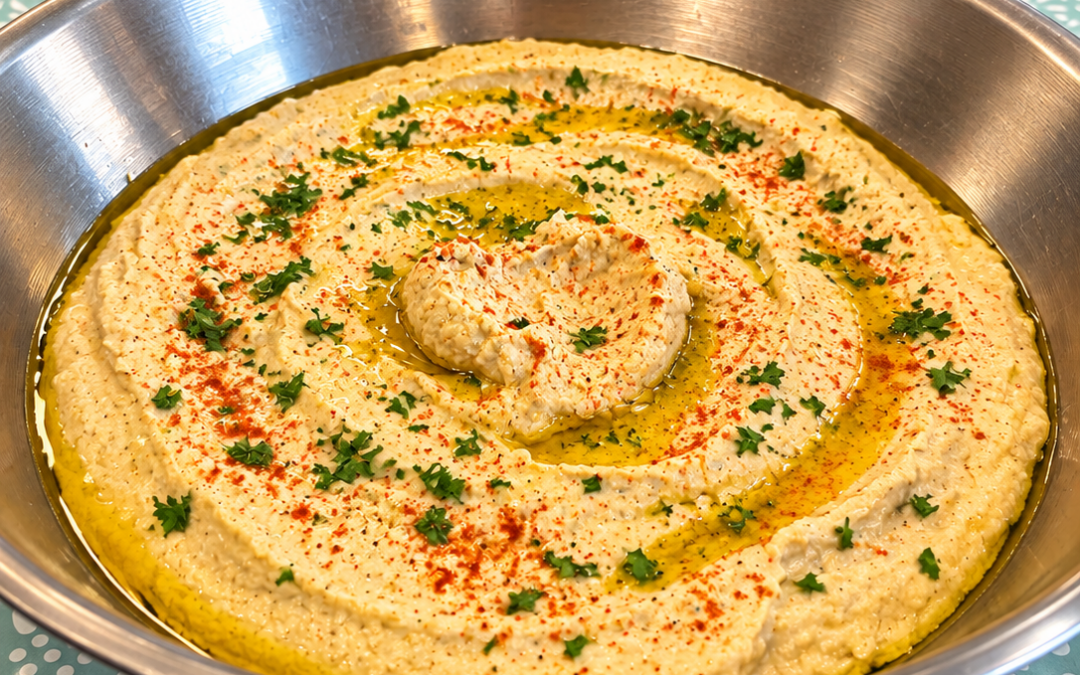
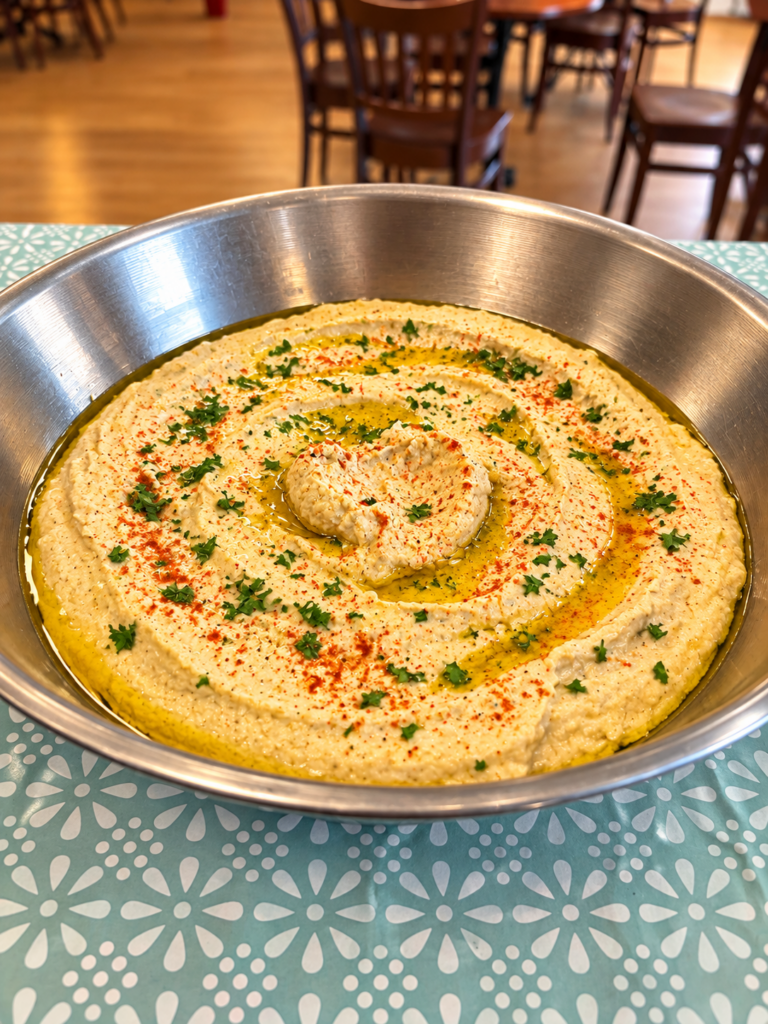
- I serve mine garnished with a drizzle of good olive oil, smoked paprika and chopped parsley, but it also keeps in the fridge, in containers with a layer of oil on top, unitl you want to serve it.
You can also flavour your hummus, beetroot or roasted peppers added whilst blending make it a great way to get veggies in and also change up the taste.
Let me know if you’d try this or do you prefer to buy it?


 This ADHD Mum was born when I hung up my parenting blogger hat and decided to share life as I see it through the lens of someone with late diagnosed ADHD. You will find ADHD & mental health content, life as I ride the menopause rollercoaster, food, because food is life, and because we love them, all things cat.
You can reach out to me at info@thisadhdmum.com or find us on social media
This ADHD Mum was born when I hung up my parenting blogger hat and decided to share life as I see it through the lens of someone with late diagnosed ADHD. You will find ADHD & mental health content, life as I ride the menopause rollercoaster, food, because food is life, and because we love them, all things cat.
You can reach out to me at info@thisadhdmum.com or find us on social media